Ghost in the Shell
| Genre | Action |
| Laufzeit | 107 Minuten |
| Ton | |
| Dolby Atmos | |
| DTS | |
| Dolby Digital | |
| 12-Track Digital Sound | |
| IMAX 6-Track | |
| Sonics-DDP | |
| Auro 11.1 | |
| Budget | 110.000.000 $ |
| Erscheinungsdatum | |
| Germany: 30.03.2017 | |
| USA: 31.03.2017 | |
| Websites | |
| Official Facebook | |
| Official Site | |
| Official Site [France] | |
| Official Site [Japan] | |
| Official Twitter | |
Beschreibung
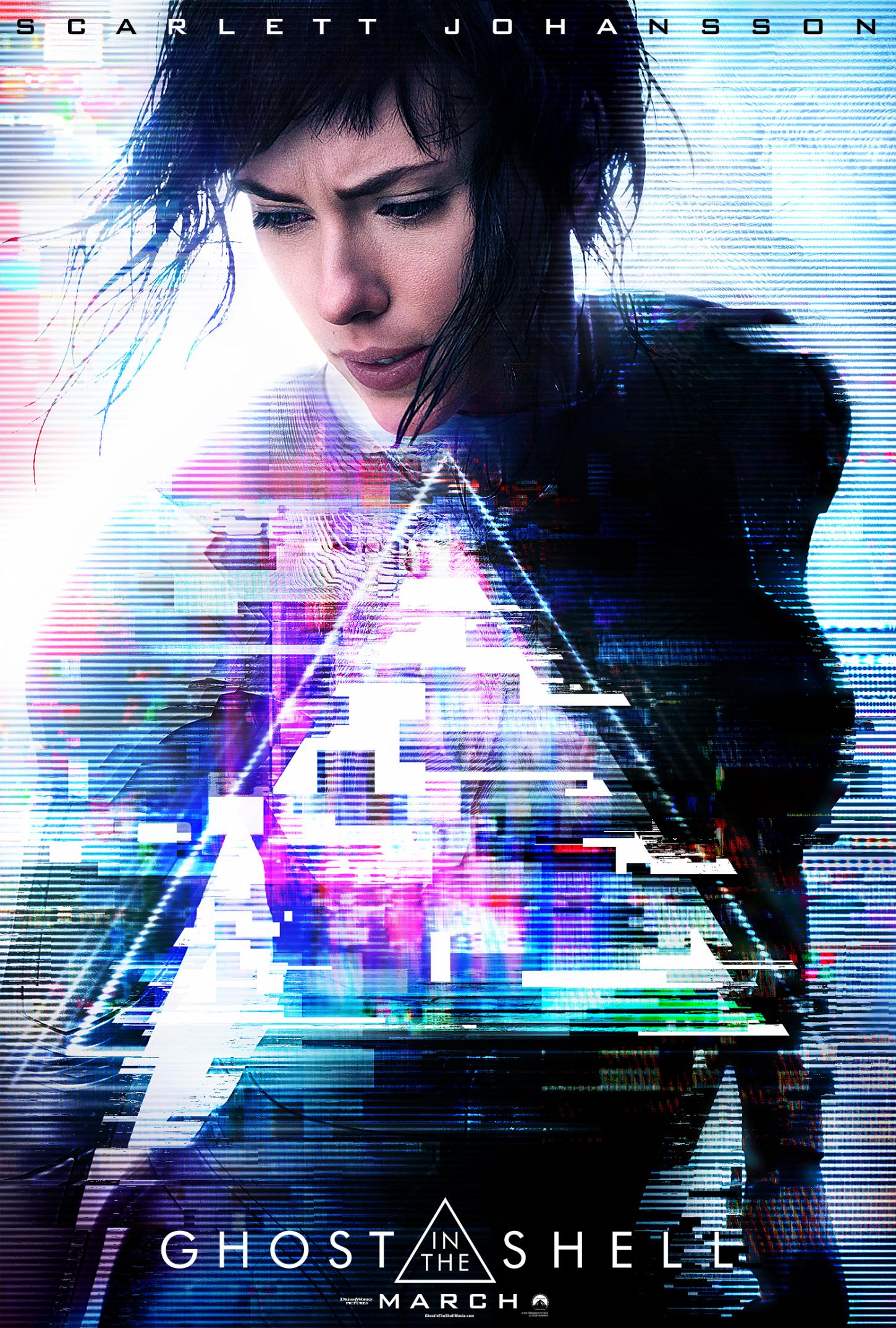
In the near future, Major is the first of her kind: A human saved from a terrible crash, who is cyber-enhanced to be a perfect soldier devoted to stopping the world's most dangerous criminals.New International Trailer
In Theaters March 31
New Trailer
Trailer
Teaser Trailer
Ghost in the Shell
Ghost in the Shell
Ghost in the Shell
Ghost in the Shell
Ghost in the Shell
Ghost in the Shell
Regisseur
Rupert Sanders
((directed by))
Schauspieler

Scarlett Johansson
(Major)
Pilou Asbæk
(Batou)
Takeshi Kitano
(Aramaki)
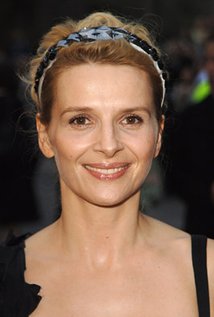
Juliette Binoche
(Dr. Ouelet)
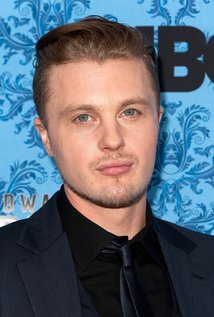
Michael Pitt
(Kuze)
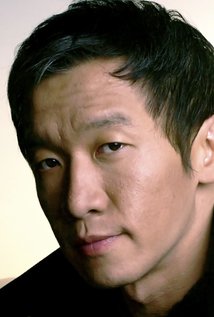
Chin Han
(Togusa)

Danusia Samal
(Ladriya)
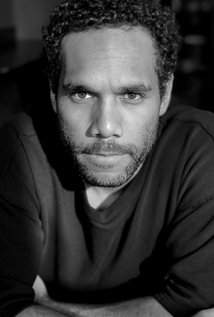
Lasarus Ratuere
(Ishikawa)
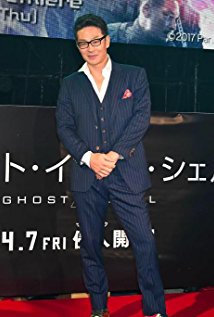
Yutaka Izumihara
(Saito)
Tawanda Manyimo
(Borma)
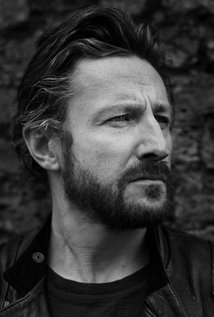
Peter Ferdinando
(Cutter)
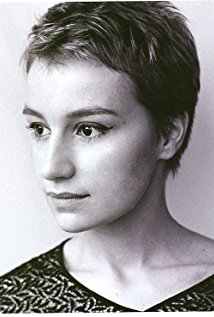
Anamaria Marinca
(Dr. Dahlin)
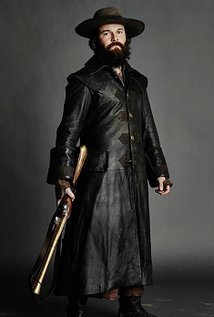
Daniel Henshall
(Skinny Man)
Mana Hira Davis
(Bearded Man)
Erroll Anderson
(Hanka Security Agent)
Kai Fung Rieck
(Diamond Face)
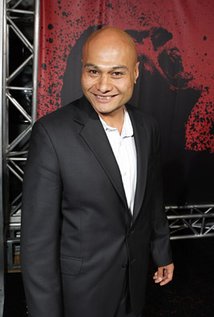
Andrew Stehlin
(No Pupils)
Matthias Luafutu
(Thick Built Yakuza)
John Luafutu
(Barkeep)
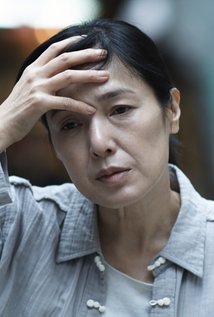
Kaori Momoi
(Hairi)
Kaori Yamamoto
(Motoko)
Andrew Morris
(Hideo)

Adwoa Aboah
(Lia)
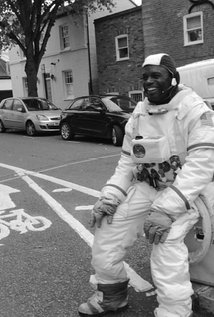
Chris Obi
(Ambassador)

Rila Fukushima
(Red Robed Geisha)
Makoto Murata
(Yakuza Gunman)
Natarsha Orsman
(Ouelet's Assistant)
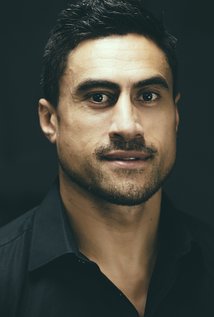
Joseph Naufahu
(Police Commander Johns)
Vinnie Bennett
(Rookie Cop)
Pete Teo
(Tony)
Xavier Horan
(Section Six Soldier)
Allan Henry
(Section Six Soldier)
Bowie Chan Wing Wai
(Yakuza)
Kirt Kishita
(Street Hustler)
David Johnson Wood
(Section Six Leader)
Kate Venables
(Geisha)
Emma Coppersmith
(Geisha)
Tanya Drewery
(Geisha)
Hannah Tasker-Poland
(Geisha)
Jacqueline Lee Geurts
(Geisha)
Shinji Ikefuji
(Kinsana)
Kayla Bechor
(Girl with News)
Lucy Beeler
(Aramaki's Assistant #1)
Julian Gaertner
(Sniper)
Oliver Heinrich
(Data Host)
Semiquaver Iafeta
(Yakuza Nightclub Bouncer)
Alex Ishikawa
(Yakuza Bar Madam)
Philippe Joly
(Section Six Soldier)
Jack Machiela
(Data Host)
Romain Mathelart
(Man at the Bar)
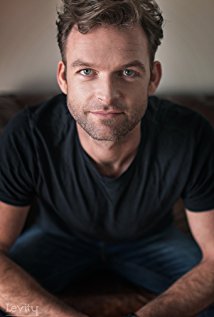
Greg McColl
(Riot Police Officer)
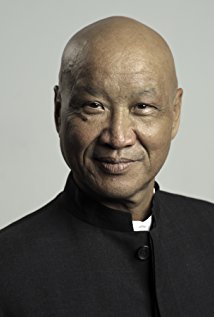
Andrew Ng
(Senior Monk)
Patrice Poujol
(Section Six Sniper)
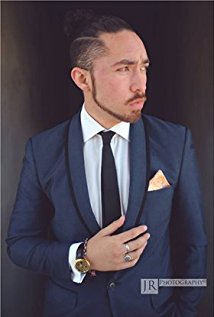
Jordan Rivers
(The Monk)
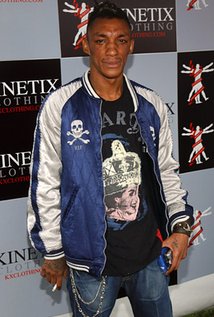
Tricky
(Senior Monk)

Ran Wei
(The Assistant)
Michael Wincott
(Dr. Osmund)
Ray Angelic
(line producer: Los Angeles unit)
Ari Arad
(producer (produced by) (p.g.a.))
Avi Arad
(producer (produced by) (p.g.a.))
Holly Bario
(co-producer)
Michael Costigan
(producer)
Jane Nerlinger Evans
(co-producer)
Tetsuya Fujimura
(executive producer)
Mitsuhisa Ishikawa
(executive producer)
Yoshinobu Noma
(executive producer)
Steven Paul
(producer)
Jeffrey Silver
(executive producer)
Maki Terashima-Furuta
(co-producer)
Jamie Moss
((screenplay by) and)
William Wheeler
((screenplay by) and)
Ehren Kruger
((screenplay by))
Lorne Balfe
Clint Mansell
Verrücktes
The title appears on screen twice. Once during the creation of the Major and again at the end of the opening credits.The first few seconds of each opening logo are trimmed.Fehler
Continuity
When Cutter confronts Aramaki in his office from across the desk, Cutter's hands don't match. When the camera is behind Cutter, his hands are balled up and he is leaning on the desk on his knuckles. When the camera is behind Aramaki, Cutter's hands are flat and he is leaning on the desk with his fingers straight.Continuity
When Aramaki's car is shot, the bullet holes are in a tight cluster in the door but, in the next shot they are more evenly spread out.Continuity
At about 42nd minute, Kuze grabs Dr. Dahlin's cigarette with his thumb and index finger but in the next shot the cigarette is between his index and middle finger.Continuity
After Batou meets Major on the boat, they sail off towards the bridge but, when the camera switches to a wide shot, there is no wake behind the boat and it's not moving.Continuity
At the 45:58 mark, Scarlett is told to 'go' and slowly jogs off to a stop while still in shot. The next scene she is running at speed.Factual errors
When Major meets Motoko's mother for the first time, she puts the kettle on the stove to make tea and it whistles. However, the kettle on the stove is not the whistling kind, which has a distinctive spout.Factual errors
In the car and suitcase shooting scene, Aramaki somehow manages to fire 8 shots out of a 6-shot revolver without reloading. That his revolver only holds the (typical) number of 6 cartridges is clearly visible in a close-up in previous scene.Miscellaneous
When Major shoots the geisha robot in the face, the robot's face is open, revealing its inner workings. The face then closes and, when next seen, the impact patterns from the bullets smoothly cross the seams of the closed face which they would not do if the face were shot when open.Plot holes
A key distinction between the source material and the film is that the Major in this film has her original human brain, which has been transplanted into a cybernetic body. In the original film she is fully cybernetic, including her brain, with only her 'ghost' transferred from her original body. This is the core of her existential crisis in the original film, as she literally does not know if she is still the original 'soul'. This film does touch on that with the nature of wiped/rewritten memories, but there can be no argument about whether her 'ghost' is present as she still has her original brain. Not only does this undermine her existential crisis in THIS film, but it also removes the meaning of the film's title, as she is no longer JUST a 'Ghost in the Shell'.Trivia
For the Japanese dub of the film, the voice actors from Ghost in the Shell (1995) - Atsuko Tanaka (the Major), Akio Ôtsuka (Batou) and Kôichi Yamadera (Togusa) - reprise their roles.
In an establishing shot of the city, a Pan Am advert can be seen in the top left. The bankrupt airlines inclusion is a reference to Der Blade Runner (1982) which also had an in-film advert for them.
Several scenes in this film are exact in visual comparison to the original Ghost in the Shell (1995). Even some parts shown in the city are exact re-creations of the original artwork.
The geishas, featured in many of the films trailers, wore full head masks created by Weta Workshop and modeled after Japanese actress Rila Fukushima. The opening or 'exploding' of the geishas' heads was mechanical rather than by using CGI.
Mamoru Oshii, the Japanese director of the original Ghost in the Shell (1995), has spoken out against the whitewashing controversy surrounding Scarlett Johansson playing Major despite not being Japanese, he gave her his blessing and said "I believe having Scarlett play Motoko was the best possible casting for this movie."
Although shot in New Zealand and never mentioned in the film, the city depicted is actually a highly digitized Hong Kong. For example, the dirty slum with narrow housing was Hsam Shui Po and the splendid background when Major is in the boat was Hong Kong Island's Central.
Filmed in Wellington, New Zealand
The scene at the yakuza bar where Batou drinks a beer that is served by a bartender with a mechanized arm is a direct hint to "Neuromancer" by William Gibson, in which there is a character named "Ratz" who is a bartender with a mechanized arm. This book is considered to be a heavy influence on cyberpunk.
Batou's car is a modified S3 Lotus Esprit. Aramaki's car is a modified Lotus Excel.
Although the film is largely an original story, the film does use several characters, as well as visual and thematic cues not only from Ghost in the Shell (1995), but also its sequel, Ghost in the Shell 2 - Innocence (2004). The geisha, for example, are lifted from Innocence.
Margot Robbie was considered for the role of Major.
The Major is referred to several times as a "miracle". Her anglicized name in the movie is "Mira Killian", a tribute to the idea that she is a "miracle" of techno-human hybridization and a testament to the greatness of the human spirit.
The film credits contain a remixed version of Kenji Kawai's soundtrack from the original film. It is not the first time the music has been remixed as "Beneath the Mask" by Kenji Kawai and Makai was a drum and bass version from 1998. Oddly, the UK release of the original film had alternate music on the credits - "Three Minute Warning" by Brian Eno and The Edge.
A subject of confusion for audience members was when, despite Rila Fukushima getting top billing with the rest of the cast, it appears that she is nowhere to be seen in this film. Her face was actually used as a model for the robotic geisha's face masks present in this film, she technically appears in this film as her likeness is used for the geisha. However, while the background geisha are played by stunt women and dancers wearing the masks resembling her, Fukushima herself also plays the iconic red robed geisha as seen by behind the scenes videos.
The body suit that Scarlett Johansson wears in the film as Major's synthetic body, known as the Thermosuit, is actually made out of silicone.
The robotic geisha in the film were all played by local New Zealand dancers and stunt women so that they can be flexible and acrobatic enough to perform the required disturbing contortions of the geisha
At one point, Batou is shown bonding with several stray dogs, including a Basset Hound he calls Gabriel who appears several more times. The director of Ghost in the Shell (1995), Mamoru Oshii, is a huge fan of Basset Hounds and had one himself, also named Gabriel. A Basset Hound recurs several times in the original film, because of this. In the sequel to the original, Ghost in the Shell 2 - Innocence (2004), Batou is shown to have a pet Basset Hound.
In the scene where the Major takes the prostitute Lia up to a room to examine her for evidence of humanity, the scene was initially longer and actually got more intimate between the two when they share a kiss before it was cut short in the editing room during post-production.
After watching Takeshi Kitano perform in front of him on the set, Pilou Asbæk was so impressed by his acting skills he decided that he was one of his new favorite actors.
This film's production was met with controversy over the choice to cast the lead role of Major (a Japanese character in the original source material and previous adaptations) as white, with the role going to Scarlett Johansson. Online protests over Hollywood whitewashing flared up in April 2016 when Paramount Pictures released the first promotional image of Johansson in costume. The anger toward her casting was exacerbated by reports that Lola VFX was commissioned to manage tests on visual effects to make white actors look Asian, though the results were reportedly rejected immediately upon their review.
Ladriya, the only other female member of Public Security Section 9, is the only character that does not exist in any previous works of Ghost in the Shell and was created from scratch for the film.
The character of Dr. Oulet was originally written as a male character, but was rewritten as female to accommodate Juliette Binoche who impressed the filmmakers at her audition. Rupert Sanders was very enthusiastic about this because he liked the idea of adding some maternity to the character.
Based on a manga and anime of the same name.
In this film, Major visits an apartment building looking for her past. When she arrives, she sees the name of the building on a card, "Avalon Apartments". It is a clear reference to Mamoru Oshii's Avalon (2001), which, at the same time, is strongly influenced by the manga and anime Ghost in the Shell. In this film, Ash, a player in a virtual reality video game, sense of reality is challenged as she attempts to unravel the true nature and purpose of the game. Avalon is a legendary island featured in the Arthurian legend. It is known as the place where King Arthur's sword, Excalibur, was forged and, later, where Arthur was taken to recover from his wounds after the Battle of Camlann. In the film, Avalon is referred as the Island where warriors of the pure heart go after death.
Matthias Schoenaerts was considered for the role of Batou.
This is Scarlett Johansson's third time playing the role of an enhanced woman; following Natasha Romanoff who received Russian combat training at a young age in the Marvel Cinematic Universe, and Lucy (2014) as the title character where she is given a drug by chance giving her more control of her brain.
Sam Riley and Jim Sturgess were both in talks for the role of Kuze.
The tips of Major's hair are dyed a blue color which actually glows a purple shade during darker scenes. This is an intentional homage to the Major's hair color, which was purple, in the Stand Alone Complex TV series.
Batou had a specially designed shotgun for the film that was created with a futuristic look to it, but problems happened on the set when the gun kept jamming and refusing to fire rounds causing the actor Pilou Asbæk to mess up several takes. Rupert Sanders encouraged him to continue filming as normal even if the gun wouldn't work properly.
In the scene of the city, there appeared advertisements displayed as 'innocence' in Japanese katakana character. This is quoted from Mamoru Oshii's anime movie Ghost in the Shell 2 - Innocence (2004). And 'Avalon', apartment name where Major went to find her past, is also quoted from Mamoru Oshii's movie Avalon (2001).
Touchstone Pictures was originally involved in the project, but after the contract with Dreamworks expired, Paramount took over the distribution rights.
Scarlett Johansson worked on this film between The First Avenger: Civil War (2016) and Avengers: Infinity War (2018).
Three of the cast members have also taken part on the television series Game of Thrones - Das Lied von Eis und Feuer (2011). This includes Pilou Asbæk, Joseph Naufahu and Rila Fukushima. They portrayed Euron Greyjoy, Khal Moro and a Red Priestess, respectively.
A Care2 petition against the film's casting titled "DreamWorks: Stop Whitewashing Asian Characters!" received over 104,000 signatures.
The holographic advertisements that are constantly seen in the film are not entirely CGI. Actors and stand-ins were used to perform motion capture for all of the holograms that are seen in the film.
Takeshi Kitano had starred in the film Vernetzt - Johnny Mnemonic (1995), which the title character (Keanu Reeves), a data courier, can store data in the memory implanted in his brain.
This is Rila Fukushima's fourth comic-book feature, after Wolverine: Weg des Kriegers (2013) (Yukio), Arrow (2012) (Katana) and Terra Formars (2016) (Sakakibara).
Kaori Momoi is a veteran Japanese actress who has only ever appeared in Japanese cinema her entire career save for one film, Memoirs of a Geisha (2005), which was her first official American film production. This film is her first American produced project in 12 years since that film, after she returned to doing Japanese film productions.
All of the actors playing the Public Security Section 9 officers had to train for several months together with stunt coordinators on how to perform hand to hand combat and how to handle guns and knives.
Funko released Pop! toys of Major, Batou, and Geisha from the movie.
Feature film debut of fashion model Adwoa Aboah.
There is a scene in a few trailers where a chapel containing several monks are seen praying, two of these senior monks were played by Tricky and Andrew Ng though all of their scenes were cut during post-production.
The film was released almost 6 months before another film set in a dystopian future about robots - Blade Runner 2049 (2017). Blade Runner (1982) which Blade Runner 2049 (2017) is a sequel to was one of the influences behind Ghost in the Shell (1995) which this film is a remake.
Scarlett Johansson doesn't wear a wig in the movie and it's her own hair which she dyed black and blue for the film.
Like Alex Rain, the main protagonist of the robot flick Nemesis (1992), Major is a policewoman that was rebuilt as a cyborg.
 Filme