Kong: Skull Island
| Genre | Action |
| Laufzeit | 118 Minuten |
| Ton | |
| Dolby Digital | |
| DTS | |
| IMAX 6-Track | |
| 12-Track Digital Sound | |
| Dolby Atmos | |
| Dolby Surround 7.1 | |
| Sonics-DDP | |
| Auro 11.1 | |
| Budget | 185.000.000 $ |
| Erscheinungsdatum | |
| Germany: 09.03.2017 | |
| USA: 10.03.2017 | |
| Websites | |
| Official Facebook | |
| Official site | |
| Official site [France] | |
Beschreibung
A team of scientists explore an uncharted island in the Pacific, venturing into the domain of the mighty Kong, and must fight to escape a primal Eden.A team of scientists explore an uncharted island in the Pacific, venturing into the domain of the mighty Kong, and must fight to escape a primal Eden.
-
IMDb EditorA washed up monster chaser convinces the U.S. Government to fund a trip to an unexplored island in the South Pacific. Under the guise of geological research, the team travels to "Skull Island". Upon arrival, the group discover that their mission may be complicated by the wildlife which inhabits the island. The beautiful vistas and deadly creatures create a visually stunning experience that is sure to keep your attention.
-
Jason BurnsWhen the Vietnam War ends, Bill Randa and his partner Houston Brooks from the Monarch organization succeed to get the financing for an expedition to the recently discovered Skull Island from Senator Willis. He hires the former Captain James Conrad to guide the expedition; a group of soldiers under the command of Colonel Preston Packard; and the awarded journalist and photographer Mason Weaver. On the arrival, the helicopters need to cross a storm and soon they drop bombs on the forest to map the seismology of the island. Soon they are attacked by a huge gorilla called Kong that destroys the helicopters and kills part of the crew and scatter the rest through the island. The group commanded by Conrad meets Hank Marlow, a survivor from the World War II that lives with a tribe of natives. He explains that Kong protects the island and the natives from underground monsters and shall not be killed. But Colonel Packard is insane seeking revenge for his men that died.
-
Claudio Carvalho, Rio de Janeiro, BrazilDefying discovery, the notorious Skull Island, a small uncharted haven in the South Pacific encircled by a perpetual storm system, harbours a uniquely complex and self-contained ecosystem. With the intention of making ground-breaking discoveries but utterly clueless of what they would find there, an exploration and research team led by scientist Bill Randa will boldly go where no man has ever gone before, completely cut-off from civilisation. But, soon, as strange and reason-defying encounters with magnificent, yet unclassified species start to baffle the esteemed scientists, one thing will become quite clear: apparently, we humans, never owned this blue planet.
-
Nick RiganasIn 1944, two World War II fighter pilots, American pilot Hank Marlow and Japanese pilot Gunpei Ikari, parachute onto an island in the South Pacific after a dogfight and engage in close combat, but the fight is interrupted by a giant ape. In 1973, U.S. government agent Bill Randa hires former British Special Air Service Captain James Conrad, a skilled tracker, to guide an expedition to map out a recently discovered island known as Skull Island. They are escorted by Lieutenant Colonel Preston Packard and his subordinates. The group is joined by anti-war photographer Mason Weaver, who believes that the expedition is a secret military operation, and intends to expose it..A diverse team of scientists, soldiers and adventurers unite to explore a mythical, uncharted island in the Pacific, as dangerous as it is beautiful. Cut off from everything they know, the team ventures into the domain of the mighty Kong, igniting the ultimate battle between man and nature. As their mission of discovery becomes one of survival, they must fight to escape a primal Eden in which humanity does not belong.
-
IMDb EditorIt's 1971, a team of explorers with a company of soldiers are following myth and legend in the Pacific amid-st rumors of an island where creatures both prehistoric and monstrous are supposed to live. Soon they come across Skull Island, the very island of lore and legend. The creatures they soon come across make the soldiers and explorers running for their very lives. Soon Kong shows up to let all know that he is the King of Skull Island and top of the food chain. Will they survive to tell their story? Will beauty win the heart of the beast?
-
ahmetkozan
Trailer With Commentary
Trailer With Commentary
Theatrical Trailer
Trailer #2
Comic-Con Trailer
Regisseur
Jordan Vogt-Roberts
Schauspieler
Tom Hiddleston
(James Conrad)
Samuel L. Jackson
(Preston Packard)
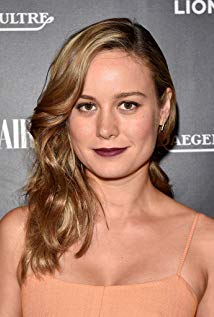
Brie Larson
(Mason Weaver)
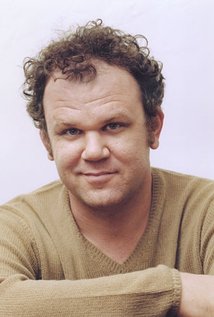
John C. Reilly
(Hank Marlow)
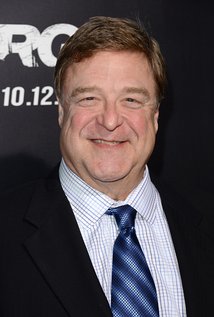
John Goodman
(Bill Randa)
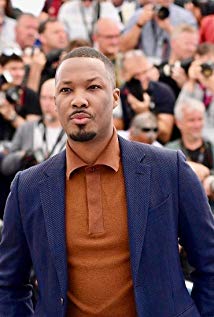
Corey Hawkins
(Houston Brooks)
John Ortiz
(Victor Nieves)
Tian Jing
(San)
Toby Kebbell
(Jack Chapman / Kong)

Jason Mitchell
(Mills)
Shea Whigham
(Cole)
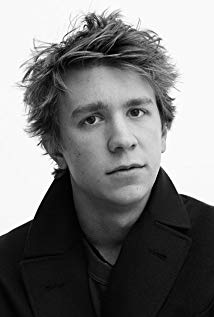
Thomas Mann
(Slivko)
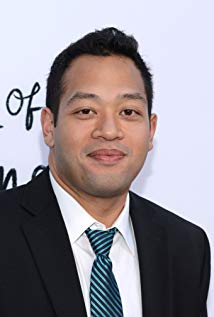
Eugene Cordero
(Reles)
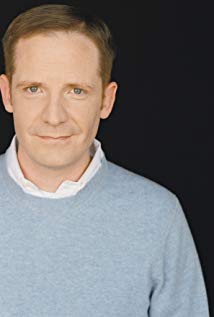
Marc Evan Jackson
(Landsat Steve)
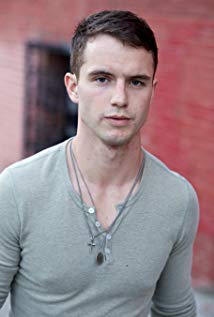
Will Brittain
(Young Marlow / Marlow's Son)
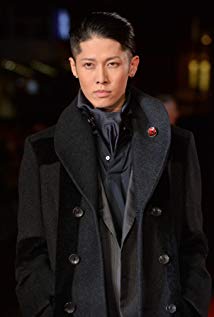
Miyavi
(Gunpei Ikari)
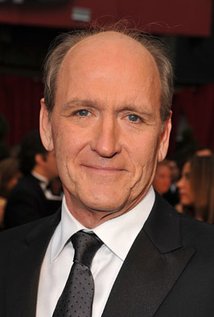
Richard Jenkins
(Senator Willis)

Allyn Rachel
(Secretary O'Brien)
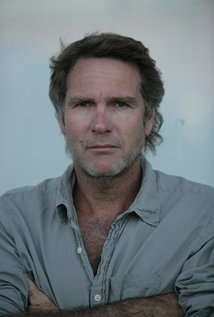
Robert Taylor
(Athena Captain)
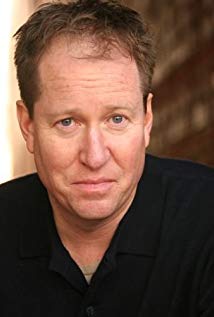
James M. Connor
(General Ward)
Thomas Middleditch
(Jerry)

Brady Novak
(Base Guard)
Peter Karinen
(Chinook Pilot)
Brian Sacca
(Chinook Co-Pilot)
Joshua Funk
(Seismic Soldier)
Daniel F. Malone
(Boat Captain)
Glenn 'Kiwi' Hall
(Boat Captain)
Garreth Hadfield
(Crew Chief)
Shannon Brimelow
(Kamikaze Pilot)
Jon Quested
(Dead Pilot)
Korey Williams
(Sunglasses Pilot)
Dat Phan
(Bar Thug)

Cynthy Wu
(Thug's Girlfriend)
Beth Kennedy
(Marlow's Wife)
Bryan Chojnowski
(Chicago Taxi Driver)
Terry Notary
(Kong)
Emmy Agustin
(Vendor)
Keisuke Akizawa
(Male Tribe Member)
Martin Sta Ana
(IWI Warrior)
Brenton Ashe
(Landsat Technician)
Miguel A. Baez Jr.
(Deckhand)
Sharon M. Bell
(Chinatown Vendor)
Lexy Bernardo
(Iwi Tribe Member)
Raj K. Bose
(Gambling Den Patron)
Alexander Canton
(Engineer)
Matthew A. Chapman
(Sky Devils Pilot)
Theo Coumbis
(Press)
Javier Diaz
(Huey Pilot)

Ann Duong
(Female Tribe Member)
Simon Durrell
(Crew Chief)
James Edward Flynn
(Sgt. Dren)
Paul Riley Fox
(RTO Soldier)
Dan Gruenberg
(Protester)
Leighton Hara
(Businessman)
Nathan Hedger
(Landsat Technician)
Michael C Hollandsworth
(Partygoer)

Nicole Hunt
(Gala Guest)
Mitchell L. Johnson
(Soldier)
Richard Allan Jones
(Businessman)

Rachel Joseph
(Iwi)
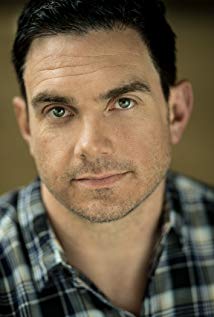
Cale Kampers
(Sky Devil)
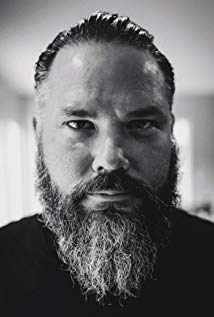
Kevin Kent
(Landsat Team)
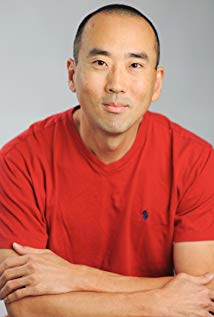
Paul S.W. Lee
(Businessman)
Alona Leoine
(Island Girl)

Jiaoying Liang
(Call Girl)
Jamie A. Marchetti
(Athena Deckhand)
Norman Martinez
(Helicopter Mechanic)
Darcie Mayo
(Gala Attendee)
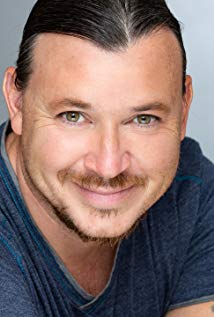
Shawn McBride
(Shop Owner)
Salvatore Merenda
(Bridge Crew)

Christine Milo
(Iwi Tribeswoman)

Ed Moy
(Dockworker)
Toshiko Onizawa
(Waitress at Saigon Bar)
Marcelo Palacios
(Gala Attendee)
Jerald M.S. Pang
(Bangkok Dockside Civilian Vendor / Saigon Gambler / VW Bus Flatbed Driver)
Jeff Parker
(Sky Devil Pilot)
Andre Pelzer
(Vietnam Soldier)
James Joseph Pulido
(Sailor)
James Quach
(Dockworker)
Jordan James Reyes
(Man In Suit)
Anthony J Sacco
(Gala Attendee)
Scott M. Schewe
(Gala Press)
David James Sikkink
(Gala Attendee)
Hunter Skeen
(Soldier)
Raymond Spaulding
(Congressman)
Jason Speer
(Sky Devil Pilot)
Vivienne Taylor
(Secretary)
Rafael Torrijos
(SkyDevil)
Andreys Varela
(ND Soldier)
Nel Venzon
(Vietnamese Pedestrian)
Scott Wallace
(Sky Devil Pilot)
John A Weaver
(Congressman)
Debbi Bossi
(associate producer)
Edward Cheng
(executive producer)
Jennifer Conroy
(co-producer)
Alex Garcia
(producer (produced by))
Jon Jashni
(producer (produced by))
Eric McLeod
(executive producer)
Mary Parent
(producer (produced by))
Tom C. Peitzman
(co-producer)
Nicholas Simon
(line producer: Vietnam)
Thomas Tull
(producer (produced by))
Dan Gilroy
((screenplay by) and)
Max Borenstein
((screenplay by) and)
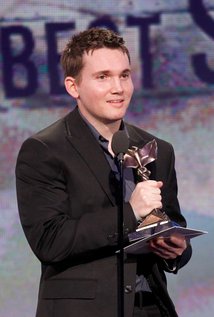
Derek Connolly
((screenplay by))
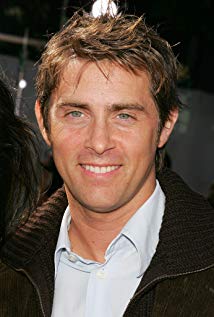
John Gatins
((story by))
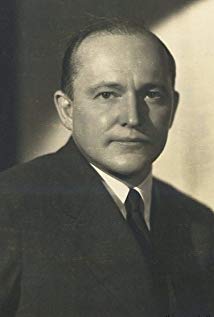
Merian C. Cooper
((based on the character created by) (uncredited))
Edgar Wallace
((based on the character created by) (uncredited))
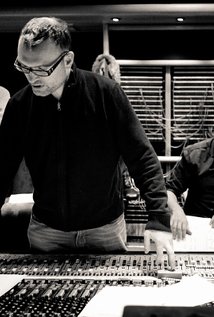
Henry Jackman
Verrücktes
SPOILER: There is a scene after the closing credits: Brooks and Lin meet Conrad and Weaver and show them records that indicate other monsters existing on Earth; the monsters seen are Rodan, Mothra, King Ghidorah and Godzilla. The scene ends with Godzilla's roar. This leads into Godzilla: King of the Monsters (2019).There is a scene in the closing credits: Marlow returns to America and reunites with his family.The Warner Bros, Legendary Pictures and Tencent Pictures logos are set in the air and made of metal, representing the aerial dogfight in the prologue.The IMAX intro for the film features the statement "Kong is King", a trip through Skull Island vistas, and Kong's roar.The opening credits are a montage of 1940-70s news videos.The closing credits are seen against a set of Iwi drawings.Fehler
Anachronisms
The graphics on the seismic devices are far beyond the capabilities of computers in 1973, let alone portable computers.Anachronisms
The cargo ship displays a giant "no smoking" sign in red letters. Smoking bans on general merchant vessels became effective only in 2009. No ship in the 70's would have had such instructions prominently painted on the deck.Anachronisms
The film depicts an anti-Vietnam War protest in 1973 and treats President Richard Nixon's troop withdrawal announcement as a surprise. In fact, the Paris Accords had been signed in December 1972 and anti-war demonstrations petered out after Nixon accepted cease-fire terms the previous May. It was no secret to anyone in January 1973 that U.S. military involvement in Vietnam was over.Anachronisms
The ID Bands on the P-51D shown in the movie intro represent ID band used by Pacific Fighter Squadron that later on in the movie when shown in the construction of the river boat, have a red outlining which is incorrect. The red outlining was removed from all US markings after 1943.Anachronisms
The Athena cargo ship used to carry the team to the island wasn't built until 2003.Anachronisms
The Ka-Bar combat knife carried by one of the soldiers had serrations on the back edge. The serrations shown are a copyrighted pattern of the Spyderco company that did not exist before 1981.Anachronisms
When she is detailing her military experience Mason mentions she was "...embedded with MACV-SOG". The practice of embedding journalists with military units during wartime did not become a formal practice until the Iraq War of 2003. Prior to that many journalists during the Vietnam War, like Joe Galloway who was with the 7th Cavalry at the Ia Drang Valley, had to find their own way to the battlefield.Anachronisms
When Randa and Brooks go to get approval for the mission from Senator Willis, the computer terminals being used are Digital Equipment Corp VT100s, introduced in late 1978.Anachronisms
One of the technical staff is referred to as a "data wrangler," a 21st century job title.Anachronisms
Weaver is inspecting B&W film in her darkroom by holding it up to the light. The edge marking says Kodak 400TX, a 2007 model.Anachronisms
Marlow said they scavenged parts from a crashed B-29 which explain the cockpit parts on the boat but the gun turret at the stern is from a ball turret like those found on a B-17. The B-29 did not have manned gun turrets except for the tail, they were remotely controlled from within the aircraft and so would not have had any Plexiglas like the turret used on the boat. Furthermore, the B-29 was not in common use until after he was shot down.Anachronisms
The cargo ship displays a giant "no smoking" sign in red letters. Smoking ban on general merchant vessels became effective only in 2009. No ship in the 70's would have had such instructions prominently painted on the deck.Anachronisms
The satellite that produced the imagery is called Landsat in the film. The satellite launched in 1972 was called Earth Resources Technology Satellite (ERTS). Its name was changed to Landsat in 1975, two years after the film was set.Anachronisms
Near the start of the film, Mason Weaver is examining some 35mm film, which has the words Kodak 400TX on the edge. This is new Kodak Tri-X, which wasn't available in 1973. It should have read Kodak 5063, which was the edge code for this film at the time.Anachronisms
The US insignia on the B-29 and P-51 fuselage and wings used for the makeshift boat is outlined in red. This particular insignia was used on US aircraft only for a short time during 1943. The B-29 did not enter service until 1944, so none would have had that insignia.Anachronisms
When updating Hank Marlow on everything he's missed in the past 29 years, Marlow asks what the man who landed on the moon eats. Victor responds, "Tang, Spam", and Hank just nods and accepts it.Although Hank would know what Spam was, Tang was not invented until 1957, introduced to the public until 1959, and popular until the mid-1960's. Given Hanks dim-witted curiosity, the chances he wouldn't ask "What's Tang?" are unlikely.
Audio/visual unsynchronised
The stylus on the record player was set to 45 but playing an LP.Character error
The Japanese soldier carried his sword in a wooden scabbard. This type of case is called a shira saya (resting scabbard). It is used to store a Japanese sword, not carry it.Character error
As a former SAS operator, it is highly unlikely that Conrad would lead a jungle mission equipped only with a tight t-shirt and a shoulder holster.Character error
Despite being an alleged former SAS member, James Conrad not only "sweeps" (passes the muzzle of his weapon across the bodies of someone he doesn't want to shoot) several people, he clearly fires directly over the head of Mason Weaver while she is standing within five feet of him. Any trained professional would avoid both of these as they could easily result in the friendly fire injury or death of a team member.Character error
As the crew is first flying through the storm to get onto Skull Island, Packard says that Icarus's wings were "made of wax". Actually they were made of reeds and feathers with the feathers attached with wax and thus when he flew too close to the sun the wax melted and the feathers fell off.Character error
As Mason is trying to lift part of the helicopter that has a buffalo trapped, Kong picks up the helicopter and throws in down, not too far from Mason. She doesn't even flinch.Continuity
The establishing shot of the Athena shows a CH-47 Chinook helicopter on the bow, four UH-1 Hueys amidships, and one CH-53 Sea Stallion on the stern. In the helicopter battle with Kong later, at least 10 Hueys are shown.Continuity
During the helicopters versus Kong fight, the time of day changes multiple times, from sunset to bright sunlight.Continuity
When Packard is about to shoot at the bird, we see him aiming with his left hand. After he shoots the bird, he puts the rifle down, and it is on his right hand.Continuity
Packard uses an M14 throughout the movie. At one point you see him looking though a scope on his rifle. Later on you see him holding the rifle and the scope is nowhere to be seen.Continuity
Kong changes sizes between various scenes.Continuity
While Randa and Brooks are speaking with Senator Willis in the corridor outside his office, a female extra approaches them from behind and enters a room. A few seconds later, the same extra again approaches them from behind and reenters the same room.Continuity
The helicopter where they bury the first group is the ch-53 which they spend the rest of the movie going towards to get weapons. They should have used the ch-47.Errors in geography
The opening scene starts on the beach, followed by a short foot chase through the woods. Suddenly they come to the edge of a cliff that is several hundred feet above a valley below. Since they started out on the beach at sea level, and during their short run through the woods they obviously did not climb a mountain, it is impossible for them to come to a valley lower than sea level that close to shore that is not filled with water (aka a lagoon).Errors in geography
The D-Day Invasion stripes on the plane during the crash in the first scene would not have been found on this plane in the Pacific Theatre.Factual errors
Early in the movie, Packard reaches for a box of cigars, with a Rocky Patel cigar label, which contains his medals. Rocky Patel Cigar Company has only been around since 2002.Factual errors
It seems strange that as at least 2 members of the team are carrying grenade launchers, not one is fired at any of the beasts they encounter. As bullets appear to be doing pretty much nothing, a change of ordnance would probably have made sense.Factual errors
After sitting (and breaking down) for almost 30 years, it is doubtful the aviation fuel would cause the home made boat's engine to turn over, let alone run.Factual errors
After the several helicopter crashes, the pilots are shown slogging through the jungle in regular infantry "steel pot" helmets and fatigues. Pilots don't carry "backup helmets" and they would have had only their flight helmet or maybe a rolled up cap in their flight suit. They don't bring infantry gear to change into in case they crash.Factual errors
The Army never flew Sea Stallions as referred to while on Skull Island. The Navy, Marine Corps and Air Force flew versions of this chopper, not the Army.Factual errors
When she is detailing her military experience Mason mentions she was "...embedded with MACV-SOG". MACV-SOG stood for Military Assistance Command Vietnam-Special Operations/Studies and Observations Group. It was comprised of Vietnamese and American troops (Special Operations Forces like the Green Berets and SEALs) and was a joint operation with the CIA concerned with behind the lines operations, making it highly unlikely that a journalist, especially a female photojournalist, would be attached to them.Factual errors
Samurai swords were razor-sharp. Someone grabbing one would lose their fingers.Factual errors
Packard wears a baseball-style cap with a adjustable strap in the back. In 1973 the Army only wore fitted caps.Factual errors
The black and white photograph of the USS Lawton seen near the beginning of the film shows the name of the ship painted on the bow. American warships have their names painted on the stern, not on the side of the bow.Factual errors
When Packard looks in his box of medals, there are a couple dog tags in there with black rubber "silencers" around their edges. These were used extensively in Vietnam to keep the two tags from rubbing together and creating noise. Yet later when the dead men's dog tags are collected, not a single one has a silencer.Factual errors
As the ship approaches Skull Island, it's said they are fifty miles away. That would be well over the horizon so not visible,Factual errors
One pilot is shown carrying and using an AK-47. While this MAY have been acceptable on a combat mission in Vietnam, in a situation where there are no other troops similarly armed, it would be unacceptable and rather foolish. The shooter would be unable to either receive additional ammunition from a teammate in a crisis; nor would they be able to scrounge ammunition if they ran short.Factual errors
One of the helicopters is called a "Sea Stallion" which is the US Navy/USMC designation of the H-53 helicopter platform. The Army's version of this aircraft was nicknamed the "Jolly Green Giant". An Army officer in an aviation unit would NOT have made this mistake.Factual errors
When Marlow describes the building of the boat, he says parts were taken from his P-51, Gunpei's Japanese Zero, and a B-29 they found on the beach. But the twin machine guns on the bow were inside a Sperry ball turret, which was used on B-17s and B-24s but NOT B-29s. Also, the guns in a ball turret had special firing mechanisms for the turret operator and were not fired with traditional grip triggers as shown in the movie.Factual errors
As the large water buffalo appears from the lake he is inhaling and exhaling as his snout, nose and mouth are under water. Also the flies around his eyes would be the size of a basketball, but they are proportionally correct to an average sized Buffalo.Factual errors
The deckhands launching the helicopters off the ship are wearing red jerseys and "cranials" which on board ship indicates they work either as firefighters or ordnancemen. The proper jersey color for launching aircraft would be yellow for an aircraft handler. The argument may be made that the ship was civilian not navy, but then none of the deck crew should have had on navy aircraft department gear at all.Factual errors
The photograph of the 'USS Lawton' shows it to be a South Dakota-class battleship. However, it was the US Navy's official practice to name battleships after States. The Lawton should have been a cruiser named after the city of Lawton, Oklahoma, or a destroyer named after a decorated war veteran.Factual errors
The main camera used by the photographer is a Leica M3. In some scenes you see a black version but in most of the scenes you see a brown one. This later version was not a standard camera, black was the only colour available at that time. Also, in one scene (in the village with the native people), a shoot is flipped, you see Mrs Larson is cranking the camera from the left side.Factual errors
When Randa inadvertently snaps a picture of the skull crawler before it kills him he flips the camera over and reacts to his impending doom however no camera from this era would had that feature like a smart phone or digital camera.Factual errors
Tom Hiddleston's character says "Sure you could load up on the Atabrine for the malaria... but what about the other bacteria?" Malaria is caused by a protozoan parasite, not a bacterium.Miscellaneous
The M-14 scope is mounted on the left side of the rifle. The ejection port is to the right. In seen where it is being fired at the monster birds, the mount is clearly seen mounted on the right side. After it is fired, the scope mount is shown on the left side.Miscellaneous
The aspect ratio consistently changes throughout the film.Incorrectly regarded as goofs
Mason was shown loading Kodak Plus-X film into her camera, which is, or was, a mid speed black and white film, OK for daytime shooting, but not for low light shots as she is seen taking later, at least not without camera shake and blurring or unless you use flash equipment. Also, as it is black and white, it isn't what you would use to capture the colors of the Southern Lights and a timed exposure would just be a bunch of gray blur. Many photographers carry more than one type of film and there may have been an off camera switch of film types.Incorrectly regarded as goofs
Japanese pilot Gunpei Ikari attempts to use a German Mauser C96 pistol at the beginning of the film. Although Japanese forces would not have been able to obtain additional munitions at the end of WWII due to financial issues, the munitions they already had would still be in circulation.Incorrectly regarded as goofs
Several times throughout the film it sounds as if Packard is referring to Major Chapman as "Captain," which is a lesser rank. However, this is due to Samuel L. Jackson's accent/inflection in which he frequently pronounces the name Chapman as "Chap-um". This can be heard by listening carefully to the dialogue.Incorrectly regarded as goofs
Japanese pilot Gunpei Ikari was shown holding a German Mauser C96 pistol at the beginning of the film, even though Imperial Japanese Navy pilots were not issued with this type of gun. It would not, however, be surprising if the pistol were to be a private weapon that Ikari bought for himself. It was not uncommon for officers, including pilots, to carry their own weapons in wartime.Incorrectly regarded as goofs
Weaver said her flash broke, thus was not able to take long exposure shots of the aurora. Any competent photographer would know that long exposures do not require flash. However, she says her flashlight is broken not her flash, she just needed some light to see her camera clearly so she could set it up right, hence why she uses the lighter to do so instead.Incorrectly regarded as goofs
Although Northern Lights aren't visible in the southern hemisphere, they could have been seeing the Southern Lights. However, it is more likely that the lights and Skull Island's unique storm system are due to the 'hollow earth' characteristics which are never fully explained.Incorrectly regarded as goofs
Colonel Packard's pistol is not a Colt Model 1911 missing its barrel bushing. It is a Colt Model 1902, which has no external bushing.Revealing mistakes
The moment Cole drops the AK47 to take on the big beast you see the 'wooden' end bend, revealing it's a rubber prop.Revealing mistakes
Jack, after filling his canteen, ends up hiding behind a rock as Kong approaches in the water, tending his wounds. The scene continues with Kong fighting the largest squid in Earth's history, no more than about 500 feet away from shore. Yet, despite all the violent activity and water splashing, no waves reach shore nor Jack, for that matter.Revealing mistakes
Flipped shot: When Mason fires the flare gun at the skull crusher, she is shooting left handed. This is shown by the strap on her bag crossing left to right instead of right to left as seen in shots before and after this.Revealing mistakes
During the point at which the helicopters are lifting off from the boat deck, you see a shot of a helicopter cyclic (the control stick) being pulled back. This is immediately followed by a shot of the helicopter lifting off and moving forward. Unlike a fixed wing aircraft, where pulling back on the stick raises the nose and causes the aircraft to climb, pulling back on the cyclic of a helicopter makes the helicopter fly backwards.Revealing mistakes
Flipped shot. When Mason is taking photos of the local tribe, her film advance lever moves from the normal right-hand side of the camera to the left hand side of the camera. The viewfinder also swaps sides.Revealing mistakes
Even if Marlow had 'gone native' and didn't wear his uniform for the 28 years he was on the island, it was still in pretty good condition and still fit pretty well.Revealing mistakes
When the chopper fleet first encounters Kong, the camera angle shifts behind him, at which point the entire chopper fleet is shown flying backwards.Character error
Several of the helicopters get swatted out of the air when they get too close to Kong. These flight crews have had sufficient time to recognize and evaluate the giant ape standing in front of them, and are at that time a safe distance away. There would be absolutely no reason to fly within the ape's reach while attacking him with their helicopter based weapons. No pilot, either experienced or inexperienced, would do such a thing. They lose eight or ten aircraft simply because they are flying at low altitude right next to Kong.Continuity
When Kong slices the skullcrawler with a boat propeller there is a gaping cut on its neck, yet a couple seconds later the wound is gone.Continuity
When Kong saves Weaver from drowning, she is lying in his hand upside down when she should have been upright. This is shown when Kong reaches into the river and grabs her. After Kong saves her from the alpha Skullcrawler, Weaver's position in Kong's hand changes as he puts her down. She goes from being inverted to being sideways then returns to her original position.Factual errors
Admittedly this is about an imaginary species but it defies physics that the flying dinosaur/bird creature could have carried off Nieves. The maximum carry load for most flying predators is around half their own body weight although a bald eagle was observed carrying a deer fawn that was near its own weight. Nieves is 5' 8" and probably weighs around 165 lbs. The movie creature didn't look much bigger than a Stellar's sea eagle which is one of the largest raptors that carries its prey whole and whose body weight range maxes out around 20 lbs.Factual errors
When Cole plans to sacrifice himself with the grenades he pulls the pins and releases the spoons. This sets the 5 second timed fuse, but there were more than 5 seconds from arming to detonation. The resulting explosion was also way too large for just two grenades, and though he was carrying several others he didn't arm them as well.Factual errors
When the soldier is filling up his canteen, he sees Kong walking right in front of him and being attacked by a giant squid. If he was filling his canteen, it couldn't have been salt water, and squids don't live in fresh water.Incorrectly regarded as goofs
When one of the helicopters is spinning out of control just prior to crashing, one of the pilots says "We have nominal control," Although in some manned space missions "nominal" means "normal", a Vietnam era helicopter pilot would not use the term in this way. The more common usage means "in name only" and the pilot is entirely correct here.Revealing mistakes
During the hectic scene where the helicopters are crashing when Kong is first encountered, you hear over the radio "...contact approach now...". In aviation, approach control is a ground based Air Traffic Control group, that generally utilizes radar to follow and vector airborne traffic. There would be no approach control on the island.Trivia
The reason Kong is larger than any of his other incarnations is due to the fact that with the upcoming greenlit Godzilla vs. Kong (2020), Kong would've been too small to fight Godzilla at his more traditional size. This is also why they included the line in the movie that "he's still growing".
Samuel L. Jackson said on a talk show that throughout filming, he and his co-stars didn't know just how big Kong was supposed to be. Whenever they asked, they got conflicting answers.
Kong's design is inspired by a combination of King Kong und die weiße Frau (1933) and the Japanese adaptation in the 1960s. This allowed the creative team to utilize a look similar to the classic Kong, while also drawing upon the exaggerated "kaiju" aspects and powers displayed by the Japanese adaptation, such as greatly exaggerated height, build, strength, and supernatural abilities. This will allow a more "even" confrontation with Godzilla in the upcoming Godzilla vs. Kong (2020).
At one hundred four feet (thirty-two meters), this incarnation of Kong is the biggest out of all the American versions.
Originally, the movie was over three hours long, however it was cut down to one hour and fifty-eight minutes in length. Elements of the movie's extended plot that didn't make it into the final cut can be found within the movie's novelization. They include James Conrad's (Tom Hiddleston's) encounter with a giant snake, and an extended fight sequence between Marlow (John C. Reilly) and Gunpei Ikari (Miyavi).
Sets were built at Kualoa Ranch, Hawaii, near the same filming locations as Jurassic World (2015).
Samuel L. Jackson repeats his line "Hold on to your butts..." from Jurassic Park (1993), which is also about an island inhabited by giant creatures.
This movie features the tallest incarnation of Kong in an American movie, standing at approximately one hundred four feet (thirty-two meters). Peter Jackson's Kong, by comparison, was only 25 feet (7.6 meters) tall. The tallest incarnation of Kong overall is the one featured in King Kong vs. Godzilla (1962), who stood approximately one hundred forty-seven feet (forty-five meters) tall. However, it is stated in the film that Kong is still growing, so this means he may be taller in future releases.
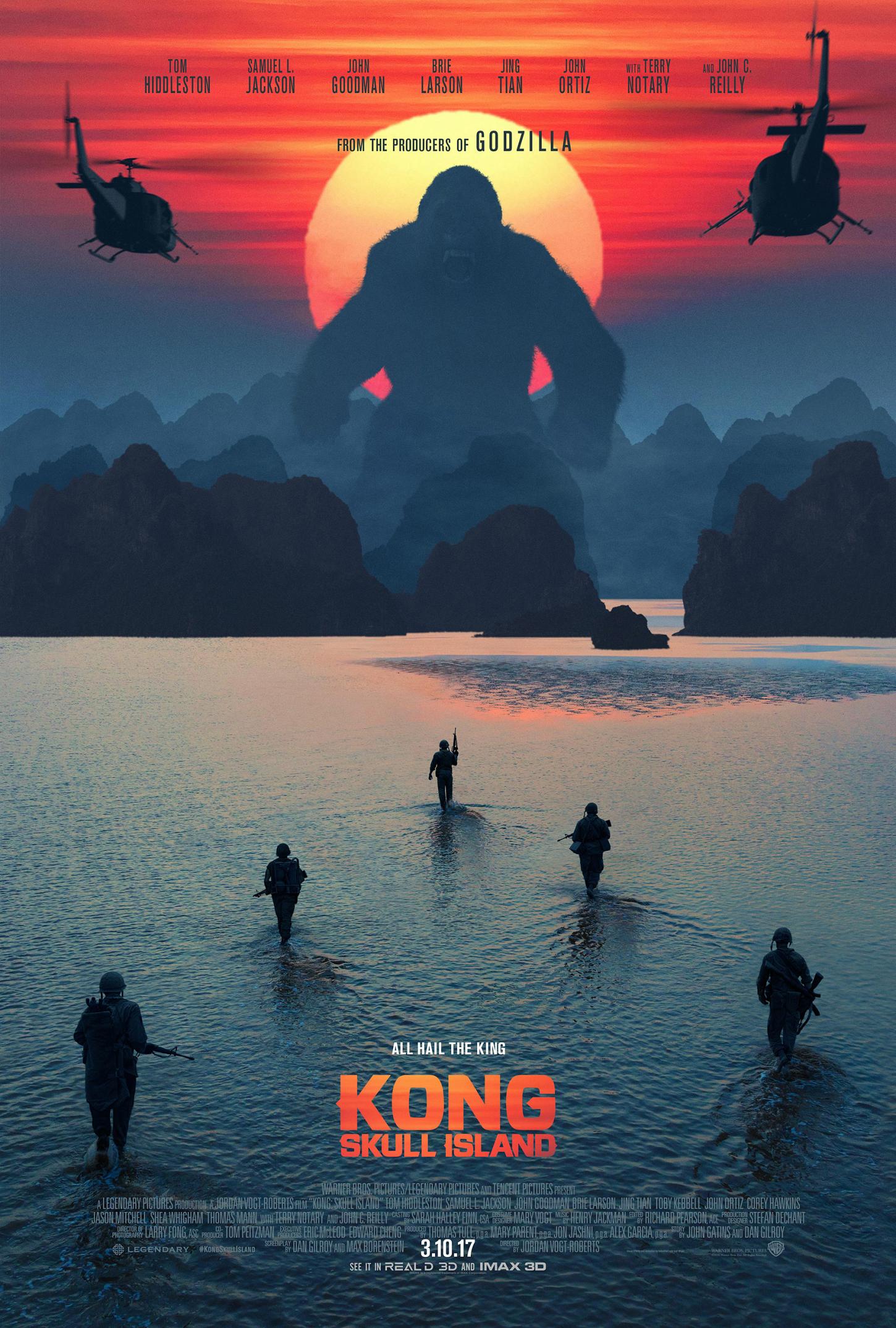
The poster for the IMAX release is an homage to the iconic poster for Apocalypse Now (1979).
Michael Keaton and J.K. Simmons were originally attached to the film. Both had to drop out due to scheduling conflicts.
The outfit worn by Bill Randa (John Goodman) replicates the outfit worn by Robert Armstrong as Carl Denham in King Kong und die weiße Frau (1933).
Director Jordan Vogt-Roberts admitted that he was strongly influenced by video games from his childhood. That is why the movie contains many point-of-view shots of guns being fired (like in a first-person shooting game), and the shot of a helicopter making 360-degree spins toward the ground was inspired by a similar scene from a Resident Evil game.
"It sounds like a bird, but it's a fuckin' ant!" This entire scene was an outtake in which John C. Reilly was trying to get the cast and crew to laugh by throwing out the most bizarre, outlandish imaginary monster he could come up with. Director Jordan Vogt-Roberts decided that it fit in with Skull Island's bizarre ecology and kept it. In a later interview, Vogt-Roberts said he wanted to include the giant ant in a scene, but couldn't, due to budget constraints.
The scenes with mountains, rivers, and grassy fields were mostly shot in Vietnam, including Ninh Binh and Quang Binh. Jordan Vogt-Roberts and the cast members said they were the most beautiful places that they've ever been.
According to Jordan Vogt-Roberts, the first draft of the screenplay had the action taking place in 1917, and was an entirely different film. Although he liked the script, he didn't think it was something he wanted to make. When asked what kind of monster movie he had in mind, he suggested to have it take place in the Vietnam war era, as a sort of "Apocalypse Now (1979) with monsters", since there had never been a monster movie set in that time. He also saw interesting parallels between the political turmoil and racial riots from the 1970s and the 2010s. Contrary to his expectation, the studio loved the idea and the script was re-worked from there.
The second installment of the MonsterVerse, following Godzilla (2014).
The scene where Kong fights a giant squid is an homage to Die Rückkehr des King Kong (1962), in which Kong's first fight is against a giant octopus.
At the premiere in Vietnam, the sixteen-foot-tall display model statue of Kong was engulfed in flames, caused by the model volcanoes surrounding the statue. The fire was extinguished in fifteen minutes, and no one was hurt.
Just as Godzilla (2014) featured characters that worked for Project Monarch and used the term M.U.T.O., so too does this movie, tying both together in the MonsterVerse, which includes Godzilla: King of the Monsters (2019), and Godzilla vs. Kong (2020).
The Skullcrawlers' history on Skull Island is revealed in Walter R. Riccio's visions. Riccio says that the Skullcrawlers attempted to invade Skull Island and waged war against Kong's ancestors. When the Iwi first arrived on Skull Island, the Skullcrawlers had wiped out all but the two strongest apes, which turned out to be Kong's parents. After the 1973 Monarch expedition, Skullcrawlers still inhabit Skull Island, but their population is controlled by Kong, and none of them has grown to the size of Skull Devil. In another vision, Riccio explained that the Skullcrawlers continued their fight against Kong's parents. One day, the Skullcrawlers attempted to kill Kong's mother who is in labor, but Kong's father kept them at bay. After Kong was born, his mother hid him in a cave and sealed it with rocks before she rushed to aid her mate. Kong then watched as the Skullcrawlers slaughtered his parents.
The copyrights of the Kong franchise are complicated. The novelization of King Kong und die weiße Frau (1933) is now in the public domain. One small difference between the movie and the novelization, is the name of Captain Englehorn's ship. In the movie, it is the "Venture", in the novel, it is the "Wanderer". The rusted-out hull of the Wanderer in this movie is a nod to the novel.
The two-armed pit lizard from King Kong und die weiße Frau (1933) was used as a reference for the Skullcrawlers. They were also inspired by several other cinematic creatures. Director Jordan Vogt-Roberts stated, "That creature, beyond being a reference to a creature from the 1933 version, is also this crazy fusion of all the influences throughout my life, like the first angel from Shin Seiki Evangerion (1995), and No-Face from Chihiros Reise ins Zauberland (2001), and Cubone from Pokémon.
The names of Marlow and Conrad are likely references to Joseph Conrad and the lead character, Marlow, from Conrad's novella Heart of Darkness. The novella, as well as the Vietnam War film it inspired, Apocalypse Now (1979), are thematic and visual inspirations for this movie. Heart of Darkness was also read by a character in King Kong (2005).
Hayao Miyazaki's Prinzessin Mononoke (1997) helped influence the design and approach of the monsters. Jordan Vogt-Roberts stated: "Miyazaki's Princess Mononoke was actually a big reference, in the way that the spirit creatures sort of have their own domains and fit within that, so a big thing was trying to design creatures that felt realistic and could exist in an ecosystem that feels sort of wild and out there, and then also design things that simultaneously felt beautiful at the same time." However, biophysical analysis of Kong and other creatures concludes that, although biophysically they are viable, the ecosystem of the island could not support them.
Kong is similar to Godzilla from Godzilla (2014) in several ways: both are the last of their kind, both have a vendetta against their natural enemies (Skullcrawlers/MUTOs) who have killed the rest of their species, and both are portrayed as morally neutral alpha-predators who maintain order and have no personal quarrel with humans. However, while Godzilla ignores humans and pays them no heed (except when he sees Ford Brody and shows emotion when they make eye contact), Kong recognizes and forms relationships with individual humans either as friends (Conrad and Weaver) or as enemies (Packard). Also, while Godzilla is an adult, Kong is an adolescent, still growing and learning.
Director Jordan Vogt-Roberts co-wrote and appeared in the Honest Trailers of his own movie, highlighting some legitimate flaws with the film, such as massive (in his own words) structural problems, lack of character arcs for most of the human cast, and the fact that there are too many human characters to begin with. However, he still stood by the film and attacked the video made on the film by CinemaSins shortly before Honest Trailers was released. He also spent some time on Twitter attacking CinemaSins for their video on the film, calling them trolls and countering some specific sins.
Bill Randa (John Goodman) says he is the sole survivor of a ship accident involving a monster. This is likely a reference to Godzilla, who we learn is connected to this movie during the after-credits scene.
The film takes place in 1973. At the beginning of the film, President Richard Nixon announces the end of the Vietnam War; this announcement occurred in January of 1973.
The reason Kong is bigger than usual is because Jordan Vogt-Roberts said he wanted Kong to feel like a god in front of his audience.
This is the first American King Kong film where Kong does not die at the end. In King Kong und die weiße Frau (1933) and King Kong (2005) he is shot by aircraft and falls to his death from the Empire State Building. In King Kong (1976) he fell from the World Trade Center, but was revealed to be in a comatose state in King Kong lebt (1986) in which he is given an artificial heart which eventually fails, and he dies. Furthermore, in contrast to the 1933 and 2005 versions who met their ends trying to fight off attacking airplanes, this incarnation of Kong makes his first major appearance by successfully defeating a group of military aircraft.
Near the end of the credits is a line that says: Characters of "Godzilla", "King Ghidorah", "Mothra", and "Rodan" created and owned by Toho Co., Ltd. This ties in with the MonsterVerse and could be a clue to kaiju appearing in future movies, including Godzilla vs. Kong (2020).
To prepare for filming, Jordan Vogt-Roberts screened the South Korean monster movie The Host (2006), the South Korean western The Good, the Bad, the Weird (2008), and the documentary Reise ins Herz der Finsternis (1991), for the cast.
Various direct references to King Kong und die weiße Frau (1933) occur throughout the film, such as when Kong is seen fighting off helicopters like the original Kong battled planes in New York City, and Kong being briefly held back by chains is reminiscent of Kong being put on display for an audience. The lead female character comforting Kong is also a recurring theme throughout several Kong films.
In an interview with Entertainment Weekly in November 2016, when asked about his artistic vision with Kong and the process of bringing him to life, Director Jordan Vogt-Roberts said: "With Kong, there's been obviously so many different versions of him in the past and ours needed to feel unique to our film. I had a mandate that I wanted a kid to be able to doodle him on the back of a piece of homework and for his shapes to be simple and hopefully iconic enough that, like, a third grader could draw that shape and you would know what it is. A big part of our Kong was I wanted to make something that gave the impression that he was a lonely God, he was a morose figure, lumbering around this island. We sort of went back to the 1933 version in the sense that he's a bipedal creature that walks in an upright position, as opposed to the anthropomorphic, anatomically correct silverback gorilla that walks on all fours. Our Kong was intended to say, like, this isn't just a big gorilla or a big monkey. This is something that is its own species. It has its own set of rules, so we can do what we want and we really wanted to pay homage to what came before, and yet do something completely different."
The Mother Longlegs spider could be an homage to the giant spider with crab claws that was cut from King Kong und die weiße Frau (1933). Also, the Skull Crawlers could be an homage to the two-legged lizard that climbs up the side of the mountain in King Kong (1933).
Godzilla, Rodan, Mothra, and King Ghidorah appear in an after-credits scene as cave paintings.
The Vietnam National Administration of Tourism (VNAT) has proposed that Director Jordan Vogt-Roberts be the Vietnam Tourism Ambassador for a three-year term.
Will Brittain portrays young Hank Marlow and his adult son.
In September 2015, Legendary Pictures moved this movie from Universal Pictures to Warner Brothers.
In the movie, Weaver (Brie Larson) makes it off of Skull Island with her film intact, while in the novelization, her film is ruined when she falls into the marsh. The book also explains that Weaver's camera acts as a barrier between her and the events going on around her.
The Sker Buffalo resembles a larger version of a yak, but its horns resemble moose antlers, and it bears close similarities to Cape Buffalo and the Philippine Water Buffalo (also known as a carabao).
No reporter would be embedded with MACV-SOG. The military never even admitted MACV-SOG existed until the 1980s.
Marlow's mention of "really big ants that sound like birds" is undoubtedly a reference to Formicula (1954), a science fiction movie about giant ants. Clips of another 1950s science fiction movie about extra large insects, Beginning of the End (1957), are shown in the exposition. The latter movie featured grasshoppers filmed walking across a photograph of a building, in an attempt to depict a plague of gigantic insects invading Chicago, Illinois.
Tom Hiddleston and Samuel L. Jackson admitted their reasons for joining the movie were basically this. Jackson even stated: "When they said 'King Kong, we want you', I was like 'Awesome!' Then I found out that I was the second choice and I still didn't care. I'll do it anyway. They had an Academy Award winner at first and he didn't want to be home away from home, away from his kids that long because we were gone forever in Hawaii, Australia, and Vietnam. So I was like 'My family didn't care, I'll go!'" Brie Larson accepted because her character was an action girl instead of a damsel in distress.
King Kong (1976) was also filmed in Hawaii.
Kong's appearance is based on his King Kong und die weiße Frau (1933) counterpart.
Actor and stuntman Terry Notary motion-captures an ape in both this and the Planet of the Apes film franchise, where he played Rocket. Coincidentally, he also appeared in Avengers: Infinity War (2018), which also features a character named Rocket.
Toby Kebbell did motion capture work as an ape (Koba) in Planet der Affen: Revolution (2014) with Andy Serkis, who did motion capture work as Caesar. Andy Serkis played King Kong in King Kong (2005).
Kong is referred to merely as "Kong" and not the usual moniker of "King Kong" (the official bio references this, stating the story of how Kong became king).
Kong seems to show a great deal of loneliness, as a result to him losing his parents to the Skullcrawlers at a young age. His eyes well up with tears when Mason Weaver (Brie Larson) gently touches him, and one of the cave paintings depicts him crouching and mourning over the remains of his deceased parents. The producers intentionally designed Kong to have a personality similar to a "teenager orphaned early and forced to assume adult responsibilities", being not yet fully grown, but left to fend for himself. Director Jordan Vogt-Roberts wanted to give the audience insight into Kong's state of mind of him being a lonely and exhausted God lumbering around the island, being its protector but also killing time as he drags himself from place to place. Terry Notary played Kong as a lonely, burdened "fourteen-year-old that's trapped in the life of an adult" who's coming into himself and his role as a protector, driven to uphold his sense of duty by the burden of the loss of his family. Director Jordan Vogt-Roberts also described Kong as an adolescent growing into his role as alpha as he faces the defining battle of his life to claim his rightful place as King of Skull Island.
In the novelization, it's revealed that Conrad's (Tom Hiddleston's) cynical demeanor stems from an incident where he failed to save a kidnapped seven-year-old girl named Jenny who was killed by a sniper along with two of the five men under his command.
In an interview with Collider, co-Writer Dan Gilroy revealed that Mason Weaver (Brie Larson) was originally meant to be "a war-weary photographer who had been taking pictures for too long and didn't believe in anything, but would experience an awakening during her first encounter with Kong."
Director Jordan Vogt-Roberts is a fan of video games, anime and manga, and littered the movie with references to them. For example, the jacket worn by Hank Marlow (John C. Reilly) ("Good for your health, bad for your education") is a spin on the one worn by Kaneda in Katsuhiro Ôtomo's manga "Akira" ("Good for health, bad for education").
Portions of the movie were filmed in northern Vietnam, including the famous Halong Bay.
Part of the reason for the film going to Warner Brothers. Legendary Pictures wanted the film to be a prelude to a potential crossover with Godzilla (2014), but Universal Pictures (holders of the Kong rights, and Legendary Pictures' current partner) refused to allow it, as they wanted nothing to do with Godzilla.
The film's marketing emulates that of Godzilla (2014), teasing and showing as little of the title monster as possible until the release date gets much closer. Justified due to being made by the same production companies and even being set in the same universe.
In April 2016, artist Joe DeVito sued the producers of this film for using elements of his Skull Island universe, which he claimed that he created, and the producers used without his permission or compensating him.
In this movie, which takes place in 1973, Hank says Kong isn't fully grown yet. We may see that Kong has grown much larger when he battles Godzilla in Godzilla vs. Kong (2020).
The Psychovultures were originally based on stingrays.
In the intro credits, there is a sketch of a turtle with the words "M.U.T.O. - Massive Unidentified Terrestrial Organism" written beside it. This could be a reference to the Gamera movies, which involve a giant turtle attacking Japan, or the two giant turtles from Toho movies, the skeletal remains of one in Godzilla und die Urweltraupen (1964), and Kamoebas from Space Amoeba (1970).
One deleted kaiju was a giant tiger with antlers.
During development, Peter Jackson recommended Guillermo del Toro as director.
Kong ripping apart and devouring the mire squid is a rare instance of a kaiju actively consuming another, while Godzilla was stated to be a "predator" of the M.U.T.O., he does not consume their remains after they are killed. In a deleted script of Godzilla vs. Biollante (1989) however, Godzilla devours Deutalios.
In the official novelization, another mire squid attacks and tries to eat Slivko before it has one of its arms cut off by San Lin, and is finished off with a flare gun to its ink sac, killing it.
Co-Writer Dan Gilroy originally wrote Conrad to be "a guy whose unit was attacked by a monster in Vietnam, driving him to go in search of it, and instead of being approached at the bar and being given a job, Conrad would have wanted to be part of the mission."
The Psychovultures are similar to the bat-like Terapusmordax from King Kong (2005).
Kong combines features of early hominids, the mythical Bigfoot, and perhaps some aspects of the Gargantuas and Gigantopithecus, as opposed to being a more realistic gorilla as seen in King Kong (2005).
Despite its name, the Spore Mantis does not resemble an actual mantis (lacking the trademark clasping forelimbs) and instead looks more like a stick insect. It is possible the name is a reference to Kamacuras.
In the novelization, it is stated that the Skullcrawlers are amphibious, as Mason Weaver (Brie Larson) mentioned the one in the Boneyard had gills, and thus would pose a threat to the world if they ever left Skull Island. This is similar to Godzilla, who is also a reptile, but strangely possesses gills. The fact the Skullcrawlers eyesockets can be mistaken for their real eyes has a similar fact for Killer Whales, as their white markings make people believe those are its real eyes.
The Skullcrawlers don't appear to have the ability to digest bone, as one is seen vomiting a human skull in the boneyard, which is similar to some species of snake that eat eggs.
The Skullcrawlers combine features of snakes, lizards, and mosasaurs, all of which are members of the reptile order Squamata (it is possible that the Skullcrawlers are ancient, highly specialized members of this taxon).
Even though the Leafwings are said to be subspecies of the Psychovultures, they have different genus and species names.
Tian Jing (San) has a total of eleven lines.
Hank's boat is named "The Gray Fox". Director Jordan Vogt-Roberts is slated to direct Metal Gear Solid, which contains a character named "Gray Fox".
Originally, the bad kaiju was going to be a giant dragon-like serpent with a saw-like jaw, but was scrapped and replaced by the Skullcrawlers. Several unused concepts for the Skullcrawlers included having a more snake-like body, being able to glide and climb trees, and having mantis-like raptorial arms.
Director Jordan Vogt-Roberts has said an inspiration and reference used for the design of the Skullcrawlers came from the Pokémon Cubone.
The film was given a limited 70mm release in North America.
When Hank Marlow (John C. Reilly) is showing off his makeshift boat, the Grey Fox, there is a baseball signed by Bill Nicholson of the Chicago Cubs, Marlow's favorite team. Nicholson played for the Cubs from 1939-1948 during World War II, the time period when Marlow's plane crashed on Skull Island.
Long before production on the film began, the filmmakers experimented with different techniques to create Kong's roar, which were overseen by Supervisor Sound Editor/Sound Designer Al Nelson. As the King Kong (1933) roar was made with a reversed tiger roar and a lion roar, Nelson visited the National Zooligical Park in Washington, D.C. and Walt Disney World's Animal Kingdom and recorded lion roars as the starting point. He also mixed and matched gorilla and monkey sounds to create additional layers. To fully capture the desired "island-shaking" levels, the sound team set up speaker systems at Skywalker Sound and played Kong's bellows and roars through a 5.1 channel system.
The leafwings are the smallest known MonsterVerse kaiju.
This film features six actors and one actress who have appeared in films based on Marvel comics: Samuel L. Jackson played S.H.I.E.L.D. Director Nick Fury, Tom Hiddleston played Loki, John C. Reilly played Nova Corps Officer Rhomann Dey, Shea Whigham played Roger Dooley, Toby Kebbell played Victor Von Doom, and Brie Larson played the title character in Captain Marvel (2019) and Terry Notary played on-set Groot in Guardians of the Galaxy Vol. 2 (2017) and Avengers: Infinity War (2018). All, except Von Doom, are part of the Marvel Cinematic Universe.
Weaver actually had a backstory about growing up with a control freak father and all around dysfunctional family that was scripted, but never filmed.
When Marlow (John C. Reilly) first notes that he is a Cubs fan, Slivko (Thomas Mann) makes fun of him, noting that he is a Tigers fan. Marlow then asks if the Tiger had won it all. In 1945, the year after Marlow was shot down and stranded on Skull Island, the Tigers defeated the Cubs in the World Series. The Cubs would not appear in another World Series until 2016, about seven months after principal photography ended.
Director Jordan Vogt-Roberts fell in love with Vietnam while visiting the country during location scouting for the movie. He ended up moving to Saigon after completing the movie, which was going well until a night out last September. While visiting a nightclub called XOXO, Vogt-Roberts was viciously attacked: "This was not a fight", he tells QQ. "I was almost killed, as were others. This was a fucking assault by insane gangsters." The filmmaker sustained contusions, a fractured skull, a cerebral air pocket, and hemorrhaging, resulting in a ten-day hospital stay and the possibility of permanent brain damage. The article's description of the surveillance footage states that "a tall guy with an expensive-looking haircut walks up and grabs the bearded man's shoulder", with the bearded man being Vogt-Roberts. He turns around and about a dozen bodies swarm him, landing punches, flipping tables, throwing glasses, bludgeoning him while he curls on the ground. The scene, one continuous, unbearable ten-minute take, ends with as many as nine mauled clubgoers on the floor. "As a director, I love violent movies," Vogt-Roberts says. "And I love fight scenes. But after I watched that shit, I was just in fucking shock." "I remember I wasn't being an asshole, I wasn't instigating. I remember getting punched in the fucking side of the face. But you never fucking know. You're out at a fucking nightclub." Vogt-Roberts, who's been a Tourism Ambassador for Vietnam since his time making this movie began looking into who might be responsible for the assault, learning that they could indeed be powerful mobsters.
This movie was released twelve years after Peter Jackson's King Kong (2005), forty-one years after Dino De Laurentiis' King Kong (1976), eighty-four years after King Kong und die weiße Frau (1933), and fifty-five and fifty years after the Toho Kong movies: Die Rückkehr des King Kong (1962) and King-Kong, Frankensteins Sohn (1967).
The Skullcrawlers share a similar body design to the Leapers from the Dead Space video games.
The film's cast includes one Oscar winner, Brie Larson, and three Oscar nominees, Richard Jenkins, Samuel L. Jackson, and John C. Reilly.
The Skullcrawlers were designed to act as the "fallen angels" of Kong's kingdom and represent the darker, bleaker aspects of Skull Island.
The freighter Wanderer, that apparently crashed ashore in 1933, shares a name with the ship from King Kong (1933).
Joe Cornish was offered the chance to direct, but declined.
In January of 2016, the production was on-location at the Gold Coast, Queensland, Australia. On January 15, 2016, filming took place at Mt. Tamborine, in the Gold Coast Hinterland. Local newspaper The Gold Coast Bulletin ran front page stories on January 12 and January 14 about the production.
There's a good chance that in their fight with Ramarak, Kong's parents very nearly killed it, or at the very least left it heavily wounded, before being overwhelmed by the sheer numbers of Ramarak's offspring. The brilliance in this is two-fold, that Ramarak went underground for years to simply heal from its wounds (as opposed to ravaging the Island once it was unopposed), and that Kong was not only fighting the smaller Skullcrawlers for experience, but was culling the population. Effectively ensuring that when he would be large and strong enough to take Ramarak in a fight, Ramarak would be forced to fight alone. One may wonder why Ramarak doesn't try to eat Kong either of the times Kong is seemingly defeated by it, instead deciding to continue going after the humans. However, recall that Kong's parents bodies also seem to have been left largely intact (judging by the state of their skeletons). Kong, to them, is not prey, but a rival to be driven away or killed, much as many real world predators like lions will readily kill other large predators like leopards and hyenas, but rarely ever eat them.
The names Conrad and Marlow are a reference to the novel "Heart of Darkness", written by Joseph Conrad, featuring a main character named Marlow. The novel was also the inspiration for Apocalypse Now (1979).
According to Hank Marlow, the Skullcrawlers are the "Devils" of Skull Island, and are feared by the natives to the point where they won't mention their true name, this makes "Skullcrawlers" an alias or a nickname, as Marlow admitted he just "made up the name" To make them sound scarier.
Mason Weaver's camera is a Leica KE 7A U.S. Army.
This is the fifth Kong film in which characters such as Ann Darrow, Carl Denham, and Jack Driscoll do not appear. It is also the second film that is different from King Kong und die weiße Frau (1933) in terms of plot. The others being King Kongs Sohn (1933), the two Toho films, and King Kong (1976).
Russell Crowe was considered for a role.
The roar of the Skullcrawler is very high in tone, possessing a raspy quality with a hiss and growl mixed in-between. According to Supervisor Sound Designer/Editor Al Nelson, the Skullcrawler roar was inspired by the pained squeal of a dying rabbit as well as the sounds of sea lions and squirrels.
William Randa (John Goodman) says "monsters do exist". John Goodman voiced James P. "Sully" Sullivan in Die Monster AG (2001) and Die Monster Uni (2013).
John C. Reilly says, "Good night, Irene." Bugsy uses the same line in Der Sturm (2000), in which Reilly appears as Murph.
Interestingly, Kong is shown with chimp-like feet with splayed big toes, despite being an obligate upright biped. A human-like foot, with a non-opposable big toe, would be more fitting for an upright ape as the big toe provides more leverage.
The Skullcrawlers have horizontally-slit pupils like a goat, even though for large terrestrial animals, this is a trait of herbivores to help them keep watch for predators.
Marlow says he was in the 15th Air Force and wears its Shoulder-Sleeve Insignia. The 15th operated in Italy during World War II. The 13th Air Force would be correct for the Southwest Pacific.
Vogt-Roberts compares the beat-up Kong at the end of the film to John McClane at the end of Die Hard (1988).
Packard carries what appears to be two Colt M1902 military pistols in a dual shoulder holster rig, the use of this pistol is an odd choice, since it was never adopted by the US military, and would be at least 45 years old by 1973, the time period for this film (although some M1911A1s, produced as early as 1924, and other designs such as the M1917 Revolver still in use were slightly older.) It is noteworthy, however, that officers often still carried their own 'unofficial' sidearms, even in the 70s.
Samuel L. Jackson uses one of his Pulp Fiction (1994) catchphrases when he exclaims "bitch please!"
Some of the background extras from the scenes shot in Vancouver also worked on Godzilla (2014).
The natives of Skull Island were antagonists out of desperation in King Kong (1933) and horrifically degenerate troglodytes in King Kong (2005). In this movie, they are a very territorial and taciturn, yet ultimately friendly and helpful people.
Packard's (Samuel L. Jackson's) unit is called an assault helicopter battalion, which, in 1973, should consist mostly of AH-1 Cobra gunships and OH-6 Loach scout choppers. Instead, it is made up almost entirely of UH-1 Hueys, only a few of which are in gunship configuration. Once downed, the surviving pilots and door gunners simply operate as infantry, and are even geared up accordingly. In a real-life Vietnam-era Air Cavalry battalion, the helicopter crews were just that, with the infantry they carried (who couldn't fly the choppers) to and from battle being a seperate formation (at least company-size) within the same battalion.
Marlow says the boat was built from salvaged parts of his P-51 Mustang, Gunpei's A6M Zero, and a B-29 Superfortress. However, the .50 BMG machine guns are mounted in a ball turret, which was only used on the B-17 Flying Fortress and B-24 Liberator.
Marlow's P-51 has invasion stripes painted on the wings and fuselage. These were only applied to Allied aircraft used in Western Europe during and after the Normandy Landings. In the Pacific, his aircraft would not have these.
Gunpei Ikari's (Miyavi's) sword, which Marlow (John C. Reilly) keeps after his death, is a shin-gunto.
Kong shares his 2005 counterpart's love of natural beauty, as he sits enraptured by the Aurora Australis.
Almost every creature (or at least those that are shown onscreen) on Skull Island has the ability to camouflage themselves and blend in to their surroundings, from Mother Longlegs, Spore Mantis, Sker Buffalos, and Leafwings. This is to disguise themselves from the apex predators like the Skullcrawlers and Kong himself. Even the natives on the island also learned to blend into the environment to avoid detection.
There are subtle references to the movie Jeremiah Johnson (1972). At one point, the characters must decide if they should walk through a sacred graveyard with many skeletons or go around, and thus take a longer route. The other reference is when Marlow asks about the outcome of the war: "Who won?" This is a line that Robert Redford used in his movie as well.
Tom Hiddleston and Samuel L. Jackson appeared in the Marvel Cinematic Universe, with Jackson playing Nick Fury and Hiddleston playing Loki of Asgard. In this movie, Hiddleston played honorable hero James Conrad, while Jackson played Preston Packard, a villainous, Captain Ahab-like character.
This is the second movie with John Goodman to feature the song "Run Through the Jungle" by Creedence Clearwater Revival, the first one being The Big Lebowski (1998).
Brie Larson's character has the surname Weaver which is probably a homage to famous actress Sigourney Weaver who coincidentally worked with gorillas in Gorillas im Nebel (1988).
Kong's intelligence and ability to quickly adapt to a fight and take advantage of his surroundings, as well having practiced on smaller skullcrawlers for years, may explain why he manages to best Ramarak when his parents couldn't. Like his parents, Kong is not strong enough to defeat the creature (he fails to break its jaws despite trying with all his might), but by utilizing the giant boat propeller he can pierce Ramarak's skin, weakening it, and by taking advantage of the later opportunity to access its soft insides, he is able to kill it. It's also possible that Kong's parents intentionally made themselves vulnerable to Ramarak's attacks, specifically to lure the alpha Skullcrawler away from their young son. Kong has no vulnerable baby apes to defend, hence can pick his fights at his own discretion rather than having to stand between the alpha and his offspring even if it leaves him at a disadvantage.
John C. Reilly and the character he plays, Hank Marlow, are from Chicago, Illinois.
Second time Samuel L. Jackson says the line "Hold onto your butts".
The second theatrical movie directed by Jordan Vogt-Roberts.
Preston Packard (Samuel L. Jackson) makes multiple references to "Force 5" during the opening helicopter attack sequence. In Pulp Fiction (1994) (which co-starred Jackson), Mia Wallace was in a television pilot called "Fox Force 5".
Kong attempts to snap a Skullcrawler's jaws apart at one point in the climax, much like he did with the T. Rex in King Kong (1933) and the V. Rex in King Kong (2005). In general, the final fight between Kong and the Alpha Skullcrawler appear to take some cues from the King Kong (2005) fight between King Kong and the V. Rexes. Both fights have a very swampy setting, with Kong holding and protecting the female protagonist from the enemy who is trying to eat her. Kong also happened to use a rock in both fights, but while it was fatal to a V. Rex in King Kong (2005), it only did minimal damage to the Skullcrawler.
Kong is the last of his kind, like he was portrayed in King Kong (2005), with visible remains of his parents.
In the climax, Kong becomes accidentally ensnared in chains, a reference to the numerous times he had been held captive the same way by humans in previous King Kong movies.
In the official novelization, it is revealed the Mire Squids' ink is flammable, and igniting it results in their death.
The MONARCH Organization is a meaningful name when we take into account of its members' views regarding the giant monsters. Bill Randa (John Goodman) and Houston Brooks (Corey Hawkins) have an almost reverent respect for them, despite the threats they posed to humanity, a trait that Dr. Ishiro Serizawa (Ken Watanabe) and his assistant in Godzilla (2014) also shared. All of them look at these monsters as akin to some higher being, such as a King or a god, hence why the name MONARCH makes sense. The general definition of monarch is "a ruler, a person or thing that holds a dominant position", something that definitely applies to beings like Kong and Godzilla.
The Mother Longlegs' name comes from "Daddy Longlegs", a common nickname for a type of arachnid.
This will be the 45th feature film from Legendary Pictures.
Derek Connolly did some last-minute work on the script.
The name "Psychovulture" comes from a mix of "psycho", a state into which they go upon ingesting certain poisonous pufferfish, and "vulture", which is a reference to their avian form. For their subspecies, "Leafwing" comes from their wing design, which is both green, and shaped much like a leaf, which is multiplied by the veins running through their wings, which look like leaf veins.
Bill Randa (John Goodman) doesn't believe in aliens. He played the alien robot Hound in the Transformers film franchise. His co-star Peter Cullen (Optimus Prime) voiced Kong in King Kong (1976).
Tom Wilkinson was in talks to play Senator Willis.
According to Samuel L. Jackson, Weaver is like a photojournalistic Jane Fonda.
In the novelization, the snake could be a reference to the Giant Boa Constrictor seen in King Kong (1933) or the Giant Sea Serpent from King Kong Escapes (1967).
The Skullcrawlers are said in some promotional material to be "missing links between snakes and lizards". However, the ancestors of snakes lost the front legs first, as fossils have been found of primitive snakes with no forelimbs but stubby hindlimbs.
On the FX Channel's bowdlerized version of the Samuel L. Jackson film Snakes on a Plane (2006), his often-quoted line is changed to, "I have had it with these monkey-fighting snakes on this Monday-to-Friday plane!" Jackson later ended up fighting monkey-type creatures in Legend of Tarzan (2016) and this movie.
John Ortiz and Shea Whigham were in The Fast and the Furious (2001).
Corey Hawkins and Jason Mitchell appeared in Straight Outta Compton (2015).
Running Gag: The soldiers saying "Dear Billy..." when coming across something unusual, which is taken from the letters that Chapman was planning to send to his son.
The Alpha Skullcrawler's "It Can Think" moment makes sense even if it isn't that intelligent. The natives probably attempted similar methods of killing it, albeit with poisons rather than explosives, once it became clear the giant apes were losing their struggle against the creatures. Too bad it most likely threw up the native volunteer before it could die. Also, look at how Ramarak reacts to Cole's (Shea Whigham's) attempt at self-sacrifice; hesitant, confused, and even frustrated. The Skullcrawler, like most predators, is probably used to prey that chooses either fight or flight. So having prey that does neither and is even calmly walking towards it sends up a big red flag, as this unusual behavior just does not compute with its predatory instincts.
Kong isn't like Godzilla, the Mutos, and Shinomura, who were ancient monsters slumbering beneath the ground. He, the Skullcrawlers, and the rest of Skull Island's residents are breeding populations that are alive and well in present day (or was in the case of Kong, since his parents died). In other words: Kaiju in this universe aren't limited to the super ancient past, there are considerably younger ones than that. The Earth could be filled with monsters without humanity ever even knowing it. Actually, from the viral marketing website, if you look at the cryptozoology section, and click on the Mother Longlegs, it says this following quote; "The Mother Longlegs has evolved sharpened spikes at the end of its powerful legs." Think about that for a moment. Not only have these monsters been breeding , but apparently they have been around for so long, that they actually evolved.
First collaboration between Tom Hiddleston and Brie Larson.
The Skullcrawlers, at least in their role in the story, are reminiscent of the Deathrunners and Gaw from the novel Kong: King of Skull Island. Like the Deathrunners, the Skullcrawlers are insatiable carnivores that force the natives of Skull Island to hide behind a wall, and are responsible for killing Kong's parents. Just like in the novel, Kong earns his status as the island's god by killing the Skullcrawlers and saving the island from their reign of terror.
The leader of the Skullcrawlers is known as a Ramarak, which is a fully grown male Skullcrawler upon maturity, they leave the nest and head out to open water.
Kong resides in the skull-featured cave atop the tallest mountain on the island, just like in King Kong (1933).
In King Kong (1976), the humans go to Skull Island in search of oil. In an earlier draft of this movie's script, they travel to Skull Island because of Conrad's search for his missing brother, after he's stranded on the island looking for a cure to all diseases known as the "Titan Serum".
Hank Marlow calls the huge reptilian creatures lurking on the island "Skullcrawlers", and the classified Monarch reports designate them as "hypervores" in the viral marketing. Both seem to indicate how insatiable and vicious they are.
Like King Kong (1976), Skull Island was found by satellites, but instead of a permanent cloud bank, it's hidden inside a perpetual storm system.
The mire squid gets its name from its environment, as "Mire" refers to a stretch of swampy or boggy ground, the same areas they tend to inhabit.
Samuel L. Jackson and Brie Larson appeared in Farce of the Penguins (2006), Unicorn Store (2017), and Captain Marvel (2019).
Kong has 14 minutes of screentime, more screentime than the skullcrawlers and skulldevil Ramarak, which have between 4-10 minutes of screentime.
Like the 1976 film, Skull Island is found by satellites but instead of a permanent cloud bank, it's hidden inside a perpetual storm system. , the humans go to Skull Island in search of oil. In an earlier draft of this film's script, they travel to Skull Island because of Conrad's search for his missing brother, after he's stranded on the island looking for a cure to all diseases known as the "Titan Serum."
Tom Hiddelston, Brie Larson, John C. Reilly, and Samuel L. Jackson all played characters in the Marvel Cinematic Universe. Hiddelston played Loki, Larson played Captain Marvel, Reilly played Corpsman Rhomann Dey, and Jackson played Nick Fury.
Thomas Mann (Slivko) talks about the Chicago Cubs and who would win in a fight, a tiger or a cub. In Project X (2012), Thomas Mann's character was named "Thomas Cubb".
The psychovultures are shown to have bright blue blood. This suggests copper-based physiology, which is unlikely, as copper is highly toxic to most animal life. On Earth, it's found only in Mollusca and Arthropoda. The Skull Island creatures are explicitly Earth biology, as they are either pre-KT event Mesozoic animals or Cenozoic megafauna.
The Royal Air Force lighter Conrad (Tom Hiddleston) inherited from his dad and lends to Weaver (Brie Larson). During the fight in the boneyard, Weaver uses it like an improvised grenade to set fire to one of the Skullcrawlers with the latent flammable gas in the air, burning it alive. However, in the novelization, Conrad uses it instead.
Kong flinging a tree at a chopper is similar to a scene in King Kong Escapes (1967).
When Kong uses the ship propellor on a chain in a way very similar to how Kratos utilizes his signature weapon in the video game francise, God of War.
When the group finds one of Kong's fresh bloody handprints on the side of a mountain, Packard proudly remarks that they were the ones to injure him, and how they'll soon have enough munitions to "finish the job" -- all but saying outright that if it bleeds, they can kill it. referencing Predator (1987).
During the final battle, Kong grabs Ramarak by the tail and swings him around before throwing him, just like he did to Godzilla, in King Kong vs Godzilla.
Gunpei's and Willis's mutual stranding, initial hostility, and subsequent friendship mirror the plot of Hell in the Pacific.
In the novelization, Kong's injuries from Packard's napalm trap are more severe as his fur is left smoldering here and there, and some patches are completely burnt off, exposing skin underneath. There are more instances of Kong's intelligence shown such as him using dirt to put out the fires made by the helicopter battle, and Packard seeing Kong trigger a rockslide to bury a Skullcrawler.
The name "Spore" means that a cell made by some plants that is like a seed and can produce a new plant, while "Mantis" is an insect.
The helicopters used in the film are, Bell UH-1 Iroquois Boeing, CH-47 Chinook, Sikorsky HH-53 Super Jolly Green Giant.
The aspect ratio changes to a letterbox format at various times throughout the movie whenever it airs on television. Sometimes the changes occur within edits in a single scene or set piece, resulting in a very unusual viewing experience. It turns out HBO is airing the airplane edit for this movie instead of the theatrical cut. Director Jordan Vogt-Roberts took to Twitter to ask HBO why they were not airing or streaming the original edit of this movie. Filmmakers often have to provide an airplane edit of a movie so that their films can properly be shown on such small screens. Vogt-Roberts says he switched to a letterbox format for some shots on the airplane edit so that it could maintain the same scope and size as the original, but on a smaller screen. Peter Atencio, the director of the Jordan Peele and Keegan-Michael Key-starring comedy Keanu (2016), responded to Vogt-Roberts and revealed he faced a similar issue with HBO on his movie, one that has never been corrected. "HBO refuses to play anamorphic movies in the correct ratio unless they're contractually obligated to," he said. "Completely ridiculous that they don't do it, when even television commercials are letterboxed these days."
Weaver (Brie Larson) shoots Ramarak in the eye with a flare gun, similar to what Herc Hansen (Max Martini) and Chuck Hansen (Robert Kazinsky) did to Leatherback in Pacific Rim (2013).
Gunpei Ikari's (Miyavi's) and Hank Marlow's (John C. Reilly's) mutual stranding, initial hostility, and subsequent friendship, mirror the plot of Hell in the Pacific (1968).
Miyavi, who played World War II Japanese pilot Gunpei Ikari, was cast as the Big Bad (who was also an Imperial Japanese military member during World War II) of Unbroken (2014).
Packard (Samuel L. Jackson) seems unusually quick to forgive Randa (John Goodman) for lying to them, which resulted in the massacre of the helicopter attack force, but Randa's story about being the sole survivor of a monster attack on a naval vessel and then dedicating himself to protecting humanity from monsters and doing what's necessary for that, is something to which Packard can relate. Both are military men who survived an attack, and both want vengeance on their attackers.
Filming took place near Hanoi, Vietnam.
When Brooks (Corey Hawkins) is documenting seismic activity, he says to Randa (John Goodman) that the bedrock is almost hollow. Goodman starred as Fred Flinstone in The Flintstones (1994), in which he lives in the town of Bedrock.
John Ortiz and Shea Whigham appeared in Pride and Glory (2008) and Silver Linings Playbook (2012).
Kong's size was a key factor in the director's decision for keyframe animation, led by ILM animation supervisor Scott Benza, to be used in making most of Kong's performance. This enabled the director to work closely with the animators to get the desired performance for Kong.
Brie Larson and John Goodman were also in The Gambler (2014) together.
Nick Robinson, Moises Arias, Erin Moriarty: Brief background cameos during the bar scene are from the actors of Jordan Vogt-Roberts' Kings of Summer (2013).
 Filme